
Triclosan
Antimicrobial endocrine disruptor (thyroid hormone interference). FDA banned in OTC hand soaps in 2016; still appears in some toothpastes and cosmetics.
Quick answer
Avoid triclosan during pregnancy. Endocrine disruptor with thyroid hormone interference. FDA banned it in OTC hand soaps (2016) but it remains in some toothpastes, deodorants, and cosmetics. Crosses placenta; detectable in cord blood and breast milk.
INCI name
Triclosan
CAS number
3380-34-5
Also known as
5-chloro-2-(2,4-dichlorophenoxy)phenol, Irgasan DP300, CH-3565
Formula
C12H7Cl3O2
What is Triclosan?
What triclosan is
Triclosan is a broad-spectrum synthetic antibacterial and antifungal agent introduced in the 1970s. For decades it was the active ingredient in “antibacterial” hand soaps, body washes, and a wide range of consumer products1.
In 2016 the FDA banned triclosan and 18 other antimicrobials from over-the-counter hand and body soaps, citing manufacturers’ inability to demonstrate that the products were more effective than plain soap and water — while raising concerns about chronic exposure2. The European Commission, Canada, and other regulators have implemented similar restrictions.
Why triclosan is avoided in pregnancy
Multiple endocrine concerns drive the avoid recommendation:
- Thyroid hormone interference. Triclosan binds thyroid hormone receptors and disrupts thyroid signaling in animal studies. Thyroid hormones are critical for fetal brain development — pregnancy hypothyroidism causes lasting cognitive impacts3.
- Placental transfer. Triclosan crosses the placenta — detectable in maternal serum, cord blood, and amniotic fluid in exposure studies.
- Breast milk presence. Detectable in breast milk after maternal use4.
- Antimicrobial resistance. Chronic environmental triclosan exposure contributes to bacterial resistance — a public-health concern beyond individual pregnancy risk.
Where triclosan still appears
The 2016 FDA ban covered OTC hand and body soaps. Triclosan can still legally appear in:
- Toothpaste — Colgate Total still contains triclosan in some formulations (used for gum disease prevention); other brands have removed it.
- Some deodorants and antiperspirants still use it as an antimicrobial.
- Some cosmetics (rare; most have reformulated).
- Many cleaning products — the FDA ban didn’t cover non-cosmetic household products.
- Treated textiles — some antimicrobial-claim athletic wear, towels, kitchenware contain triclosan.
How to avoid triclosan during pregnancy
- Toothpaste: Choose any brand that doesn’t list triclosan in active ingredients. The vast majority are triclosan-free.
- Deodorant: Avoid products specifically marketed as “antibacterial” deodorants. Check ingredient lists.
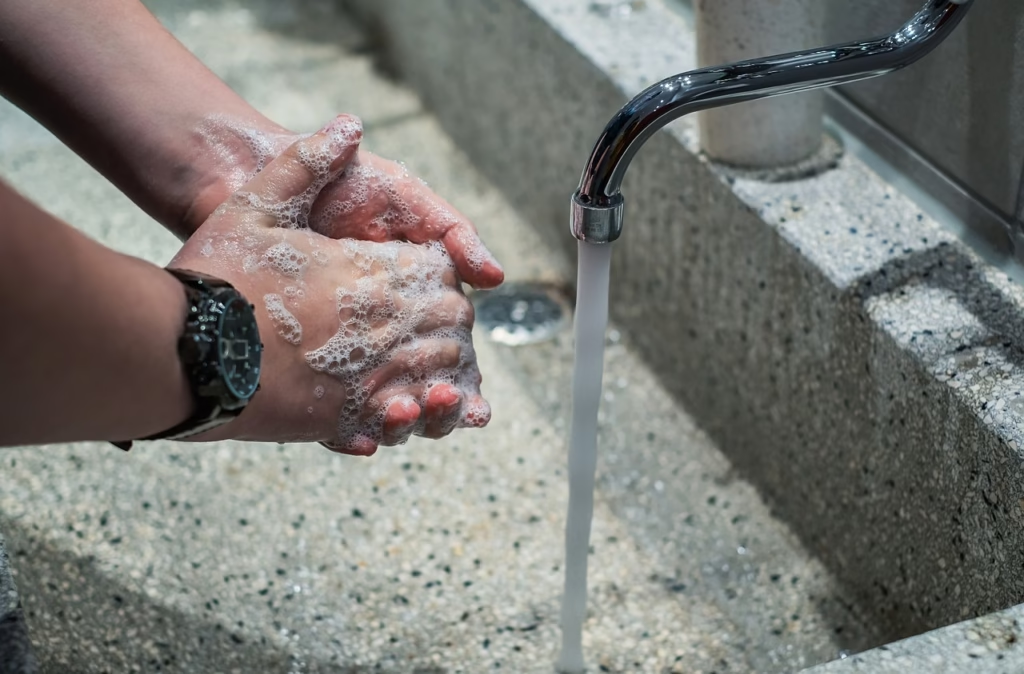
- Hand soap: Plain soap and water is as effective for hygiene as antibacterial soap, per FDA. Bonus: post-2016 ban, most hand soaps are already triclosan-free.
Is Triclosan safe while breastfeeding?
Avoid during breastfeeding — triclosan is detectable in breast milk after maternal exposure.
When to talk to your OB
If you used a product containing Triclosan before learning you were pregnant, mention it at your next prenatal visit — but most topical cosmetic exposures are not a cause for panic. For prescription exposures or specific concerns, contact your OB or midwife directly.
Sources
- U.S. National Library of Medicine. Triclosan. PubChem. View source →
- U.S. Food and Drug Administration. (2016). Antibacterial Soap? You Can Skip It, Use Plain Soap and Water. FDA Consumer Updates. View source →
- Paul KB, Hedge JM, Bansal R, et al. (2012). Developmental triclosan exposure decreases maternal, fetal, and early neonatal thyroxine. Environmental Toxicology. View source →
- Allmyr M, Adolfsson-Erici M, McLachlan MS, Sandborgh-Englund G. (2006). Triclosan in plasma and milk from Swedish nursing mothers. Science of the Total Environment. View source →