
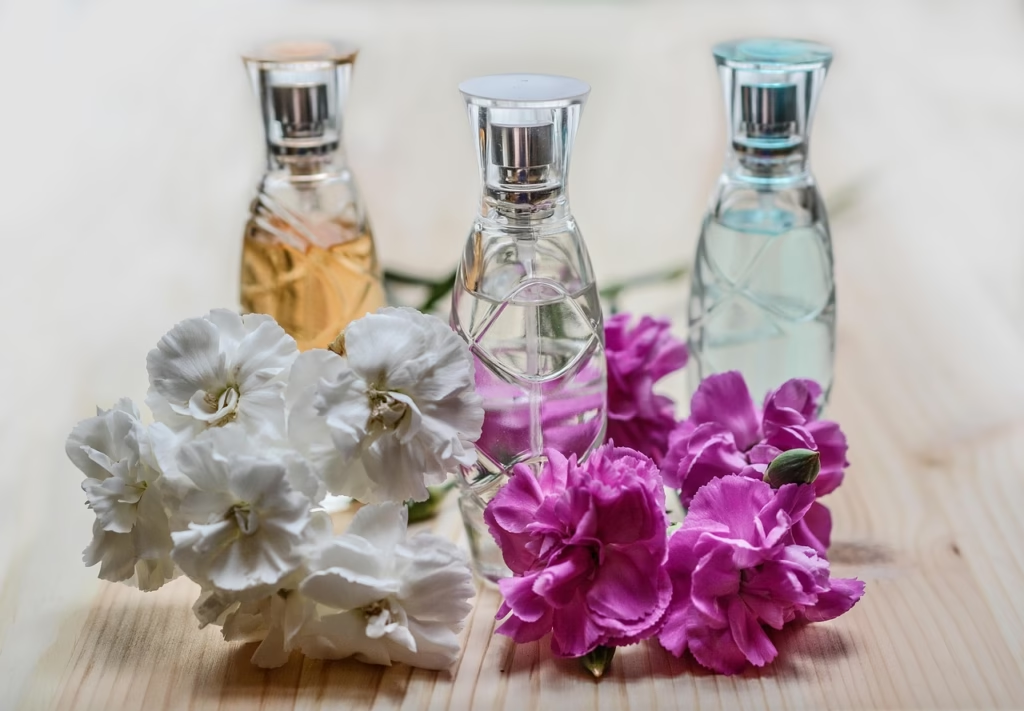
Fragrance / Parfum
Trade-secret scent blend that can hide phthalates, allergens, and endocrine disruptors. Use cautiously during pregnancy — choose fragrance-free.
Quick answer
Use products listing 'fragrance' or 'parfum' cautiously during pregnancy. The term can hide phthalates, allergens, and endocrine disruptors under U.S. trade-secret rules. Choose fragrance-free or fully-disclosed scent when possible.
INCI name
Fragrance (Parfum)
Also known as
Parfum, perfume, aroma, fragrance oil
Formula
varies
What is Fragrance / Parfum?
What “fragrance” means on a label
The single ingredient “fragrance” (or “parfum” on EU products) is a regulatory loophole. Under U.S. cosmetic law and similar regulations globally, manufacturers can list this single term to represent a proprietary blend that may contain anywhere from a handful to hundreds of distinct chemicals1.
The justification is “trade-secret protection” — fragrance formulas are considered intellectual property. But this means consumers cannot identify what specific chemicals they’re putting on their skin when buying a fragranced product.
Why “fragrance” is caution-rated in pregnancy
The fragrance disclosure loophole means a single product labeled with “fragrance” may contain:
- Phthalates — commonly used as fragrance solvents and fixatives. Diethyl phthalate (DEP) in particular shows up routinely in fragrance compositions2.
- Synthetic musks — some (galaxolide, tonalide) bioaccumulate and have endocrine-disrupting potential.
- Allergens — 26 fragrance allergens are required by EU labeling but not by U.S. law.
- Endocrine disruptors — various molecules with weak estrogenic or anti-androgenic activity have been detected in fragrance analyses.
An Environmental Working Group analysis found an average of 14 undisclosed chemicals in popular fragrance products, including multiple chemicals with endocrine-disrupting potential3.
The phthalate issue specifically
Prenatal phthalate exposure is associated with altered male reproductive development (reduced anogenital distance) and neurodevelopmental effects. Because phthalates are often hidden in “fragrance” without separate labeling, choosing fragrance-free is one of the most effective ways to reduce prenatal phthalate exposure4.
How to navigate fragrance during pregnancy
- Fragrance-free is the safest choice. Look for products explicitly labeled “fragrance-free” or “unscented with no masking fragrance.” Note: “unscented” alone can still contain masking fragrance.
- Fully-disclosed essential oils. Products that list each scent ingredient by name (e.g., “lavandula angustifolia oil, citrus aurantium oil”) let you actually evaluate what’s in them — though some essential oils (lavender, tea tree) have their own pregnancy cautions.
- EWG Verified and Made Safe certifications require ingredient disclosure beyond the “fragrance” loophole.
- Some brands voluntarily disclose their fragrance components. The Estée Lauder family and Unilever have committed to full fragrance disclosure for some product lines.
Industries with the worst fragrance disclosure
Conventional perfume, body sprays, scented candles, air fresheners, fabric softeners, and laundry detergents tend to have the highest concentrations of undisclosed fragrance compounds. For pregnancy, scaling back use of these — or switching to fragrance-free versions — is one of the simpler high-impact changes.
When to talk to your OB
If you used a product containing Fragrance / Parfum before learning you were pregnant, mention it at your next prenatal visit — but most topical cosmetic exposures are not a cause for panic. For prescription exposures or specific concerns, contact your OB or midwife directly.
Sources
- U.S. Food and Drug Administration. Fragrances in Cosmetics. FDA. View source →
- Hubinger JC. (2010). A survey of phthalate esters in consumer cosmetic products. Journal of Cosmetic Science. View source →
- Environmental Working Group. (2010). Not So Sexy: The Health Risks of Secret Chemicals in Fragrance. EWG. View source →
- Swan SH, Main KM, Liu F, et al. (2005). Decrease in anogenital distance among male infants with prenatal phthalate exposure. Environmental Health Perspectives. View source →