
Using a Pregnancy Scanner at the Grocery Store: A Real-World Walkthrough
Answer
Use a pregnancy scanner at the grocery store to check meats, dairy (for listeria-risk unpasteurized items), packaged foods (for nitrates, artificial colors, and excess sodium), and produce. Scanning takes 2–3 seconds per item; the SafeMom app flags concerns instantly.
A pregnancy scanner is most useful when you have a system. Walking around the grocery store scanning every single item you pick up is overkill — but skipping the scan on the products that matter most defeats the purpose. Here is a realistic, aisle-by-aisle walkthrough of where a pregnancy scanner pays off most, where it doesn’t, and the items that always deserve a second look.
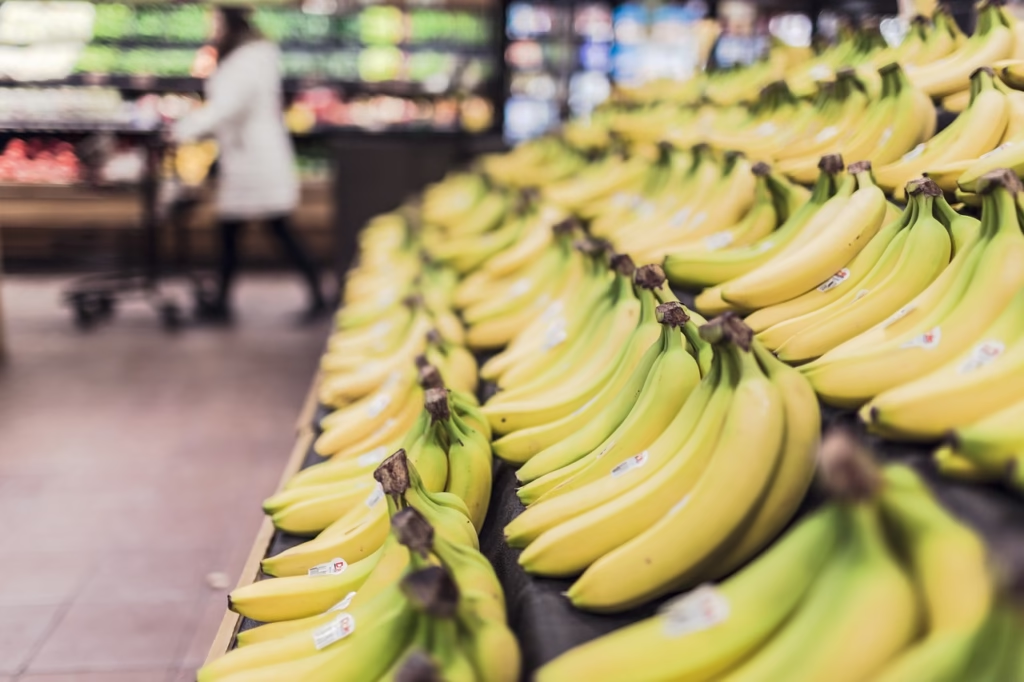
Produce: don’t scan, but do wash
Fresh fruits and vegetables don’t have ingredient lists. The pregnancy concerns are pesticide residues and listeria — both handled by washing well, not scanning. The EWG’s “Dirty Dozen” list is your shortcut for which produce to prioritize buying organic. Skip cantaloupe and other rough-skinned fruits if you’re being conservative — listeria can adhere to and survive on the rind.
Deli and meat: skip the scan, follow the rules
The pregnancy concerns at the deli counter are listeria (cold cuts, soft cheeses) and mercury (high-mercury fish). These aren’t ingredient-label questions. See our deli meat in pregnancy piece for the right rules. Quick version: heat deli meats until steaming if you eat them; skip queso fresco, brie, blue cheese, feta, and other unpasteurized soft cheeses; limit high-mercury fish (king mackerel, swordfish, tilefish, bigeye tuna).
Packaged food: scan selectively
What’s worth scanning:
- Tea blends — many “wellness” teas contain herbs that aren’t pregnancy-safe (raspberry leaf in first trimester, licorice root, dong quai). Scan before you steep.
- Supplements and vitamins — herbal blends especially. Many “energy” or “immune” formulas include herbs flagged in pregnancy.
- Energy drinks and pre-workouts — caffeine count, plus other stimulants worth checking.
- “Functional” snacks — bars and snacks marketed with adaptogens or “wellness” ingredients (ashwagandha, etc.).
- Imported foods — some additives common in foreign markets aren’t approved or are restricted in the US.
What you can skip scanning:
- Standard pantry items you’ve eaten for years (rice, oats, flour, oil, vinegar).
- Refrigerated dairy you’re already cleared on (pasteurized).
- Frozen vegetables and basic frozen meats.
Household aisle: scan everything
This is the highest-yield aisle for a pregnancy scanner. Cleaning products, laundry, air fresheners, dish soap — they hide more pregnancy-concerning ingredients than the food aisles do. Scan every product you’re putting in the cart. See our full pregnancy-safe cleaning products guide for the swap list.
Beauty and personal care: scan every leave-on product
If you’re picking up a new lotion, foundation, sunscreen, deodorant, lipstick, or any leave-on cosmetic — scan. The ingredient lists are long and the flagged ingredients are common. Rinse-off products (shampoo, body wash) are lower-priority scans because absorption is low, but worth checking what you use daily.
Baby aisle: scan especially carefully
This catches people off guard. The baby aisle looks pregnancy-safe but contains many products with formaldehyde-releasers (especially baby shampoo and bubble baths) and fragrance. Scan everything you’re buying to stock the nursery. The “pregnancy” and “baby” sections of stores are no cleaner than the regular shelves by default.
Pharmacy: ask, don’t scan
For prescription medications and most OTC meds, ask your OB or pharmacist directly rather than relying on a scan. Medication pregnancy categories are nuanced (the FDA replaced the old A/B/C/D/X system with narrative summaries), and many “avoid in pregnancy” warnings have specific trimester or condition caveats your OB knows better than an app does.
A grocery trip in three priorities
- Always scan: household cleaners, leave-on beauty products, baby products, supplements, herbal teas.
- Scan if new: packaged foods you haven’t bought before, especially functional/wellness-marketed items.
- Skip scanning: fresh produce, standard pantry staples, pasteurized dairy, prescription medications (ask your OB instead).
Not sure if a product is pregnancy-safe? SafeMom’s pregnancy scanner reads the label and flags concerning ingredients in seconds. Get the app →
This article is informational and not medical advice. Always talk to your OB-GYN before changing medications, treatments, or supplements during pregnancy.